Introduction
Type 2 Diabetes Mellitus (T2DM) is a chronic metabolic disorder characterized by high blood glucose levels due to insulin resistance and, over time, insufficient insulin production. Unlike Type 1 Diabetes, which is autoimmune, Type 2 Diabetes develops gradually and is strongly linked to lifestyle factors such as diet, physical inactivity, stress, and excess body weight. Because it often progresses without obvious symptoms, many people live with Type 2 Diabetes for years before diagnosis—by which time complications may already be developing.
This comprehensive guide explains Type 2 Diabetes in clear, practical terms: what it is, why it happens, how to recognize it early, and—most importantly—how to prevent, manage, and even reverse it in some cases through evidence‑based lifestyle changes.
What Is Type 2 Diabetes?
Type 2 Diabetes occurs when the body becomes resistant to insulin, the hormone that allows glucose to enter cells for energy. Initially, the pancreas compensates by producing more insulin. Over time, this compensation fails, blood sugar levels rise, and chronic hyperglycemia develops.
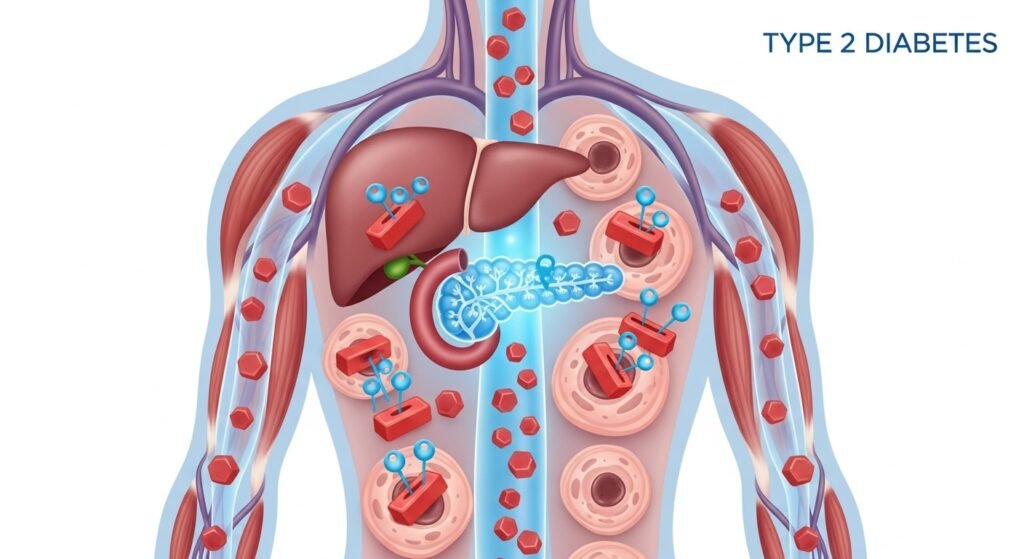
Glucose is the primary fuel for the body. When it cannot enter cells efficiently, it remains in the bloodstream, damaging blood vessels, nerves, and organs. Type 2 Diabetes is not just a blood sugar problem—it is a whole‑body condition affecting the heart, kidneys, eyes, brain, and immune system.
How Common Is Type 2 Diabetes?
Type 2 Diabetes accounts for approximately 90–95% of all diabetes cases worldwide. Its prevalence is increasing rapidly due to urbanization, sedentary lifestyles, highly processed diets, and rising obesity rates. Alarmingly, it is now being diagnosed in younger adults and even teenagers—groups once considered low risk.
Causes and Risk Factors
Type 2 Diabetes develops from a combination of genetic predisposition and environmental influences.
Major Risk Factors
- Overweight and Obesity: Excess visceral fat interferes with insulin signaling.
- Physical Inactivity: Muscles that are not used regularly become less responsive to insulin.
- Unhealthy Diet: High intake of refined carbohydrates, sugary drinks, and trans fats increases insulin resistance.
- Family History: Genetics play a significant role.
- Age: Risk increases after age 35, though younger cases are rising.
- Chronic Stress and Poor Sleep: Both elevate blood sugar through hormonal pathways.
- Gestational Diabetes History: Women who had diabetes during pregnancy face higher future risk.
Early Signs and Symptoms
Type 2 Diabetes often develops silently. When symptoms appear, they may include:
- Frequent urination
- Excessive thirst
- Persistent fatigue
- Blurred vision
- Slow‑healing wounds
- Tingling or numbness in hands and feet
- Unexplained weight loss or gain
- Recurrent infections
Early detection is critical because complications can begin before symptoms become obvious.
Diagnosis
Doctors diagnose Type 2 Diabetes using blood tests:
- Fasting Blood Glucose Test
- HbA1c (Glycated Hemoglobin): Reflects average blood sugar over 2–3 months
- Oral Glucose Tolerance Test (OGTT)
Consistently elevated results confirm the diagnosis.
Complications of Uncontrolled Type 2 Diabetes
Without proper management, Type 2 Diabetes can lead to serious complications:
Short‑Term
- Fatigue and low energy
- Frequent infections
Long‑Term
- Heart Disease and Stroke
- Kidney Failure (Diabetic Nephropathy)
- Vision Loss (Diabetic Retinopathy)
- Nerve Damage (Neuropathy)
- Foot Ulcers and Amputations
- Cognitive Decline and Dementia Risk
These outcomes are not inevitable—early and consistent management dramatically reduces risk.
Can Type 2 Diabetes Be Reversed?
In many cases, yes—especially in early stages. Research shows that significant weight loss, dietary changes, and increased physical activity can normalize blood sugar levels and reduce or eliminate the need for medication. This is often referred to as diabetes remission, not a cure, because vigilance must continue.
Diet and Nutrition for Type 2 Diabetes
Diet is the cornerstone of diabetes management.
Key Principles

- Prioritize whole, unprocessed foods
- Control carbohydrate quality and quantity
- Balance meals with protein, fiber, and healthy fats
Recommended Foods
- Non‑starchy vegetables (leafy greens, broccoli, peppers)
- Whole grains in moderation (oats, brown rice, quinoa)
- Lean proteins (fish, eggs, legumes, poultry)
- Healthy fats (olive oil, nuts, seeds, avocado)
- Low‑glycemic fruits (berries, apples)
Foods to Limit or Avoid
- Sugary drinks and juices
- Refined flour products
- Processed snacks
- Trans fats and deep‑fried foods
Physical Activity and Exercise
Exercise increases insulin sensitivity and helps muscles use glucose efficiently.
Best Types of Exercise
- Brisk walking
- Strength training
- Cycling or swimming
- Yoga and flexibility training
Aim for at least 150 minutes of moderate activity per week.
Stress, Sleep, and Blood Sugar
Chronic stress raises cortisol levels, increasing blood glucose. Poor sleep disrupts insulin regulation.
Practical Tips
- Practice deep breathing or meditation
- Maintain consistent sleep schedules
- Limit screen time before bed
Medications and Medical Management
When lifestyle changes are not enough, medications help control blood sugar:
- Metformin
- Sulfonylureas
- GLP‑1 receptor agonists
- Insulin therapy (in advanced cases)
Medication works best when combined with healthy lifestyle habits.
Monitoring and Self‑Care
Regular monitoring empowers patients to stay in control:
- Check blood glucose as advised
- Track meals and activity
- Attend regular medical checkups
Prevention Strategies
Preventing Type 2 Diabetes is possible for many people:
- Maintain a healthy body weight
- Eat balanced meals
- Stay physically active
- Manage stress
- Get regular health screenings
Living Well With Type 2 Diabetes
A diagnosis of Type 2 Diabetes is not the end of a healthy life. With education, support, and consistent habits, people can live full, energetic lives while minimizing complications.
Final Thoughts
Type 2 Diabetes is a global health challenge—but it is also one of the most preventable and manageable chronic conditions. Knowledge, early action, and sustainable lifestyle choices are the most powerful tools for long‑term health.